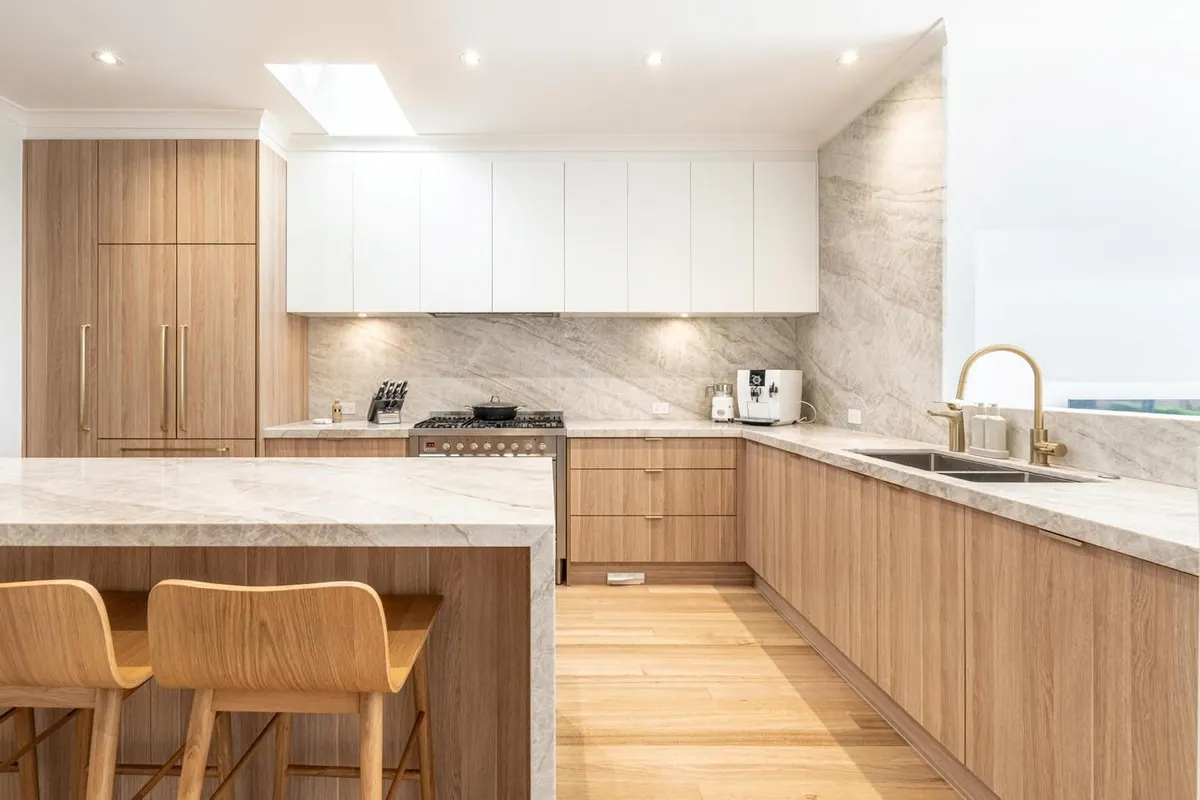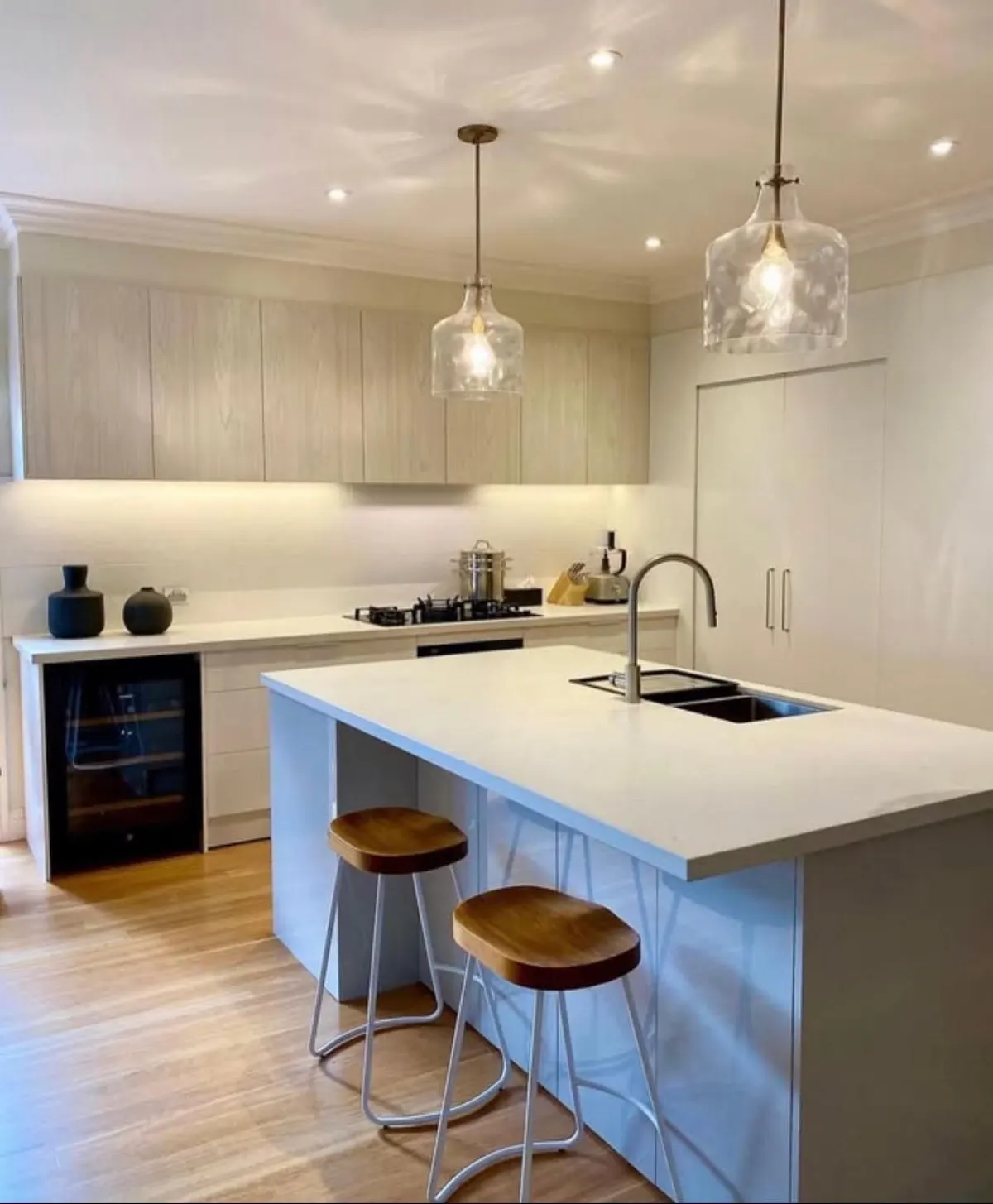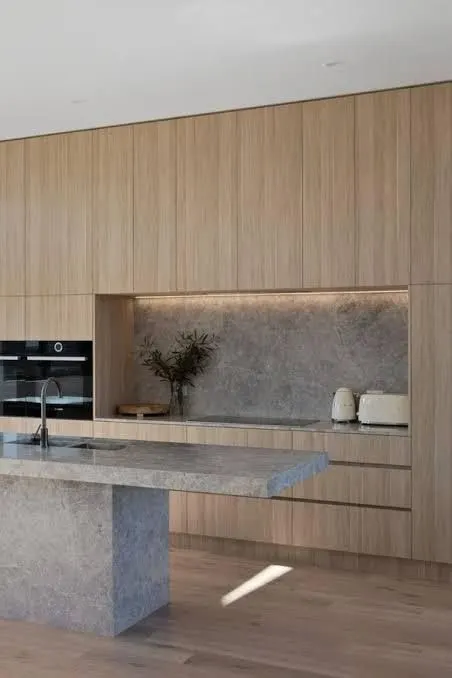
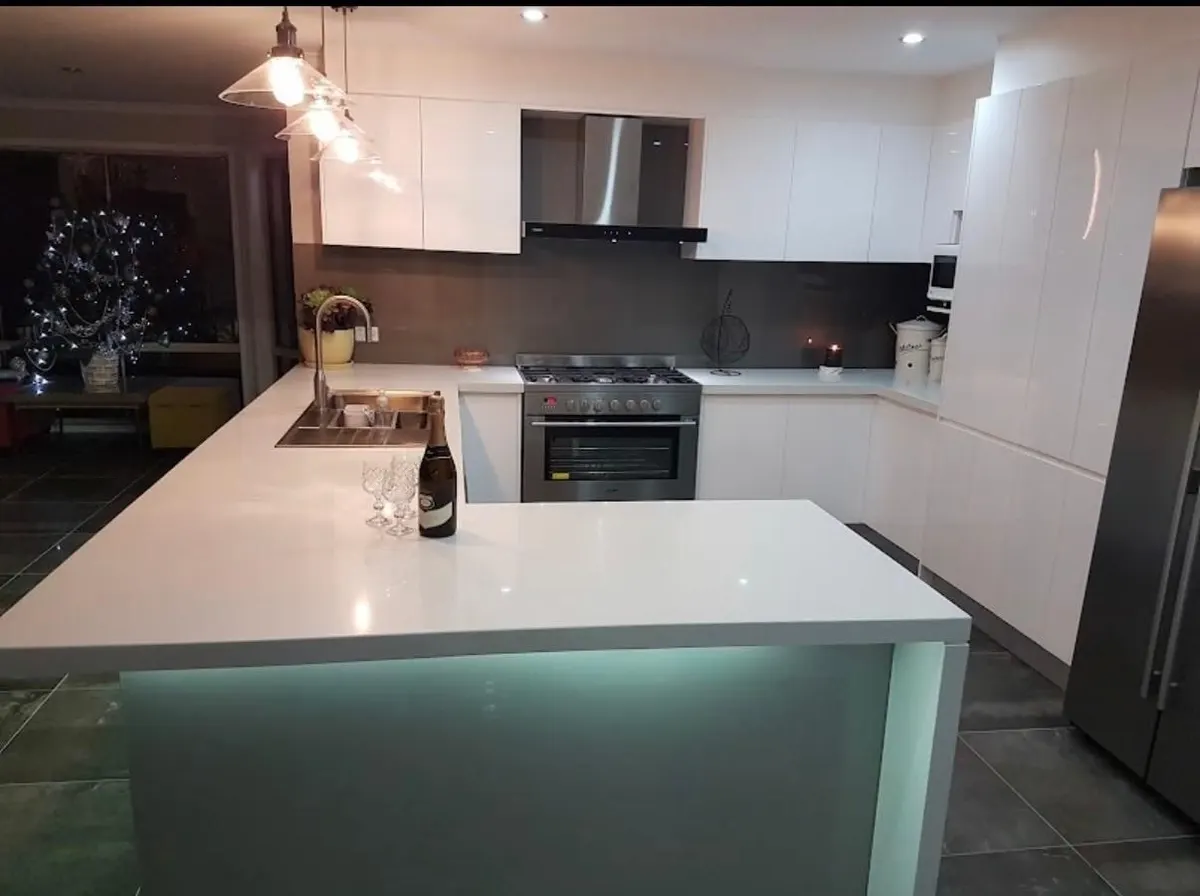
Your benchtop is the hardest working surface in the kitchen. It takes hot pans, red wine, lemon juice, school projects and the occasional dropped jar. It's also one of the most visible design choices in the room, so it's worth getting right.
The options have changed a lot in recent years, mainly because engineered stone is no longer available in Australia. Here's an honest comparison of benchtop materials for kitchen renovations in Sydney.
First, the engineered stone ban
For years, engineered stone (often sold as quartz) was the most popular benchtop in Australian kitchens. From 1 July 2024, the use, supply and installation of engineered stone benchtops, panels and slabs was prohibited across Australia. The ban responds to the serious health risk that crystalline silica dust poses to the workers who cut and install it. You can read more on the Safe Work Australia website.
What it means for you:
- You can't have a new engineered stone benchtop installed as part of a kitchen renovation.
- Existing engineered stone benchtops are fine to keep.
- There are plenty of great alternatives, which we cover below. Some manufacturers now make engineered surfaces with little or no crystalline silica. If you're offered one, ask for its silica content and confirm it complies.
Natural stone
Granite, marble, quartzite and other natural stones are quarried, cut into slabs and polished or honed.
Pros: Each slab is unique, it adds real character and value, and granite and quartzite are very hard wearing.
Cons: Marble is softer and can etch from acids like lemon juice and vinegar. Natural stone needs sealing, and some types need more care than others.
Best for: Statement islands, classic and luxury kitchens, homeowners who love natural variation.
Porcelain
Porcelain benchtops are made from fine clays fired at very high temperatures into large, thin slabs.
Pros: Highly resistant to heat, stains, scratches and UV, non porous so no sealing is needed, and available in convincing marble, concrete and stone looks.
Cons: The pattern is printed on the surface on many products, so edge details need careful design. Edges can chip if hit hard.
Best for: Busy family kitchens, indoor and outdoor kitchens, modern designs.
Sintered stone
Sintered stone is similar to porcelain, made by compressing natural minerals under heat and pressure.
Pros: Very durable, heat and stain resistant, and suitable for indoor and outdoor use.
Cons: Similar edge chipping risk to porcelain and usually a higher price.
Best for: Outdoor kitchens, sleek contemporary kitchens.
Laminate and compact laminate
Laminate is a decorative layer bonded to a board. Compact laminate is a solid, dense sheet made from layers of resin and paper.
Pros: Laminate is the most affordable option with a huge range of looks. Compact laminate is thin, strong, water resistant and can be used with undermount sinks.
Cons: Standard laminate can be damaged by heat and deep scratches, and edges show wear over time.
Best for: Budget kitchens, rentals, laundries and kids' areas.
Timber
Solid timber benchtops bring warmth and texture.
Pros: Beautiful, warm and can be sanded back and refinished.
Cons: Needs oiling and care, and isn't ideal right next to the sink where water sits.
Best for: Islands, breakfast bars and Scandinavian or farmhouse styles.
Stainless steel and solid surface
Stainless steel is hygienic, heat resistant and very durable, though it scratches and shows fingerprints. It suits industrial looks and serious cooks. Solid surface materials can be joined without visible seams and repaired if scratched, but are less heat resistant.
Quick comparison
| Material | Heat resistance | Scratch resistance | Maintenance | Relative cost |
|---|---|---|---|---|
| Natural stone (granite, quartzite) | High | High | Seal periodically | Medium to high |
| Marble | High | Low to medium | Seal, avoid acids | High |
| Porcelain | Very high | High | Very low | Medium to high |
| Sintered stone | Very high | High | Very low | High |
| Laminate | Low | Medium | Low | Low |
| Compact laminate | Medium | High | Low | Medium |
| Timber | Low | Low | Oil regularly | Medium |
How to choose
- Think about how you cook. Lots of heavy pans and heat? Porcelain or granite. Mostly light use? You have more options.
- Consider the edges. Thin, modern edges suit porcelain and compact laminate. Thick, mitred edges suit stone.
- Mix materials. A natural stone island with a more practical surface on the back bench can be the best of both worlds.
- See full slabs. Especially with natural stone, a small sample doesn't show the full pattern.
- Plan the budget. Benchtops usually take 10 to 15 percent of a kitchen budget. See our kitchen renovation cost guide.
Get advice on your benchtop
Benchtops are chosen alongside cabinetry, splashbacks and layout, so it's best to decide on them as part of the whole design. Our kitchen layout ideas are a good next read. Find out more about our kitchen renovations in Sydney or book a free consultation and we'll bring samples to your home.
Frequently asked questions
Can I still get engineered stone benchtops?
No. The use, supply and installation of engineered stone benchtops, panels and slabs has been prohibited in Australia since 1 July 2024 because of the health risks to workers from crystalline silica dust. Existing engineered stone benchtops can stay in place.
What is the most durable kitchen benchtop?
Porcelain and sintered stone are among the most durable options for everyday kitchens. They resist heat, stains and scratches well, though their edges can chip with heavy impacts.
Which benchtop is best for a budget kitchen?
Quality laminate is the most budget friendly option and is available in convincing stone and timber looks. Compact laminate costs more but is thinner, tougher and more water resistant.